Door Depot — Commercial Door Configuration & Ordering
A self-service platform that connects commercial door choices, compatibility rules, pricing, fabrication details, inventory, and ordering.
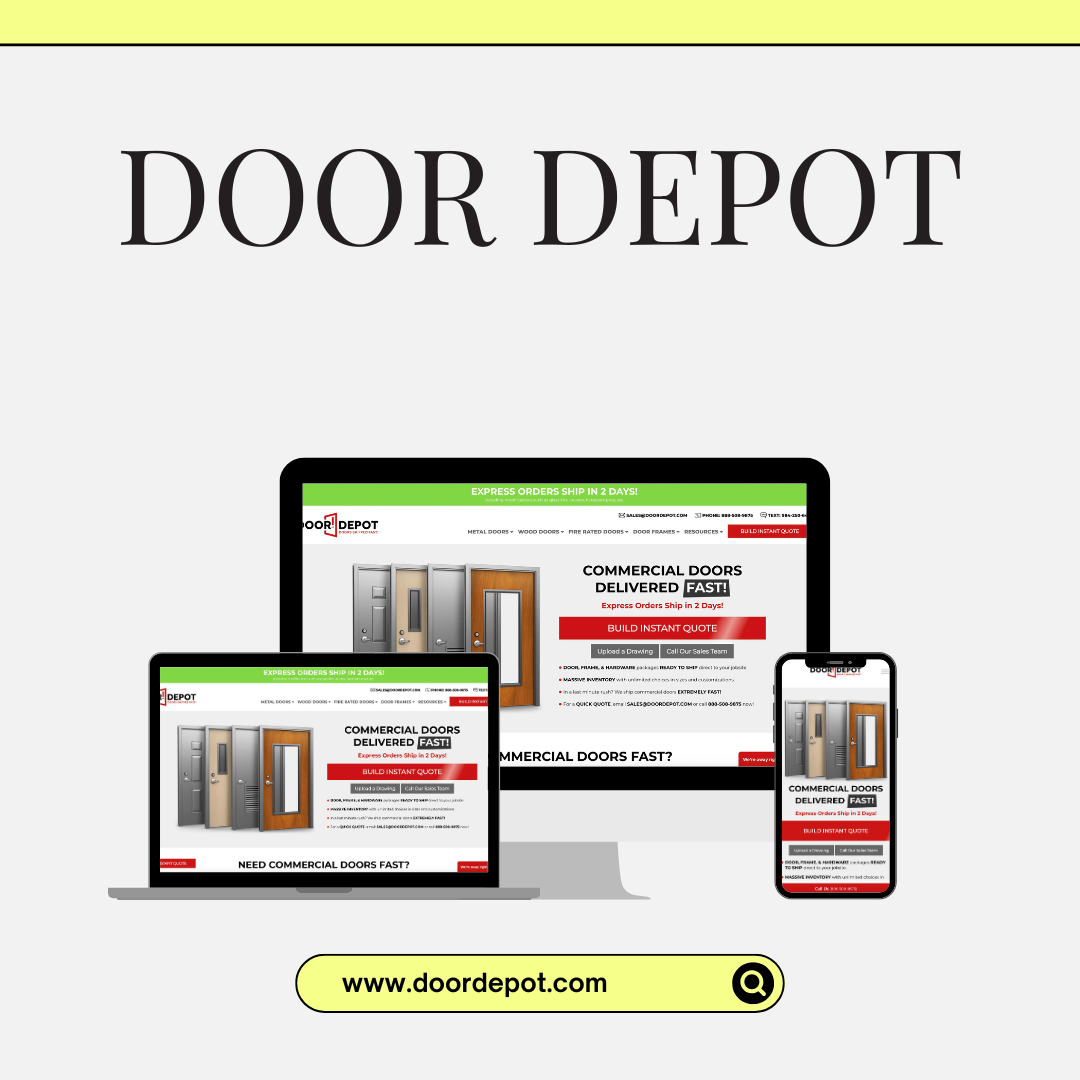
The Challenge
Commercial doors are not simple catalog items. Door material, frame preparation, hardware, fire-rating requirements, fabrication details, and availability all affect whether a configuration is valid and how it should be quoted.
Door Depot needed those dependencies expressed in software so contractors and dealers could make informed choices while the operations team retained control of inventory, fabrication, and fulfillment details.
The Product Decision
Infitics built a connected commercial door ordering platform rather than a standalone configurator. The customer experience captures the product definition; the Rails application carries that information into pricing, inventory, fabrication, and order operations.
Customers can configure doors, provide drawings for custom fabrication, review a quote, and continue into ordering while the business retains the detailed product and operational context behind each request.
Key Engineering Decisions
- Model the whole assembly: connect doors, frames, hardware packages, ratings, and preparation options
- Guide valid choices: make product compatibility part of the configuration flow
- Preserve fabrication context: accept drawings and carry custom preparation details into operations
- Connect inventory and ordering: keep product availability and the resulting order in the same platform
- Support distinct users: provide appropriate ordering access for dealers and contractors
Technical Architecture
The platform combines a React frontend configurator with a Ruby on Rails application managing the product catalog, pricing rules, inventory, and order workflow. PostgreSQL stores the connected product model across door types, frame preparation, hardware compatibility, and rating requirements.
The important architecture choice is the shared domain model: the options presented to customers and the information used by operations are part of the same system rather than duplicated across separate tools.
The Outcome
Door Depot has a connected self-service path from product configuration to order operations. This case study intentionally describes the shipped workflow rather than publishing scale, shipping, or performance figures that do not yet have approved measurement records.
Does your catalog hide operational complexity?
Show us the product relationships, exceptions, and handoffs. We will help you turn them into a clear customer and operating workflow.